Shopping cart
You have 0 Item in your cart
Language and Shipping
Choose your language and shipping country in order to see correct pricing, delivery times and shipping costs.
Language and Shipping
Natural or Lab-Grown Diamond
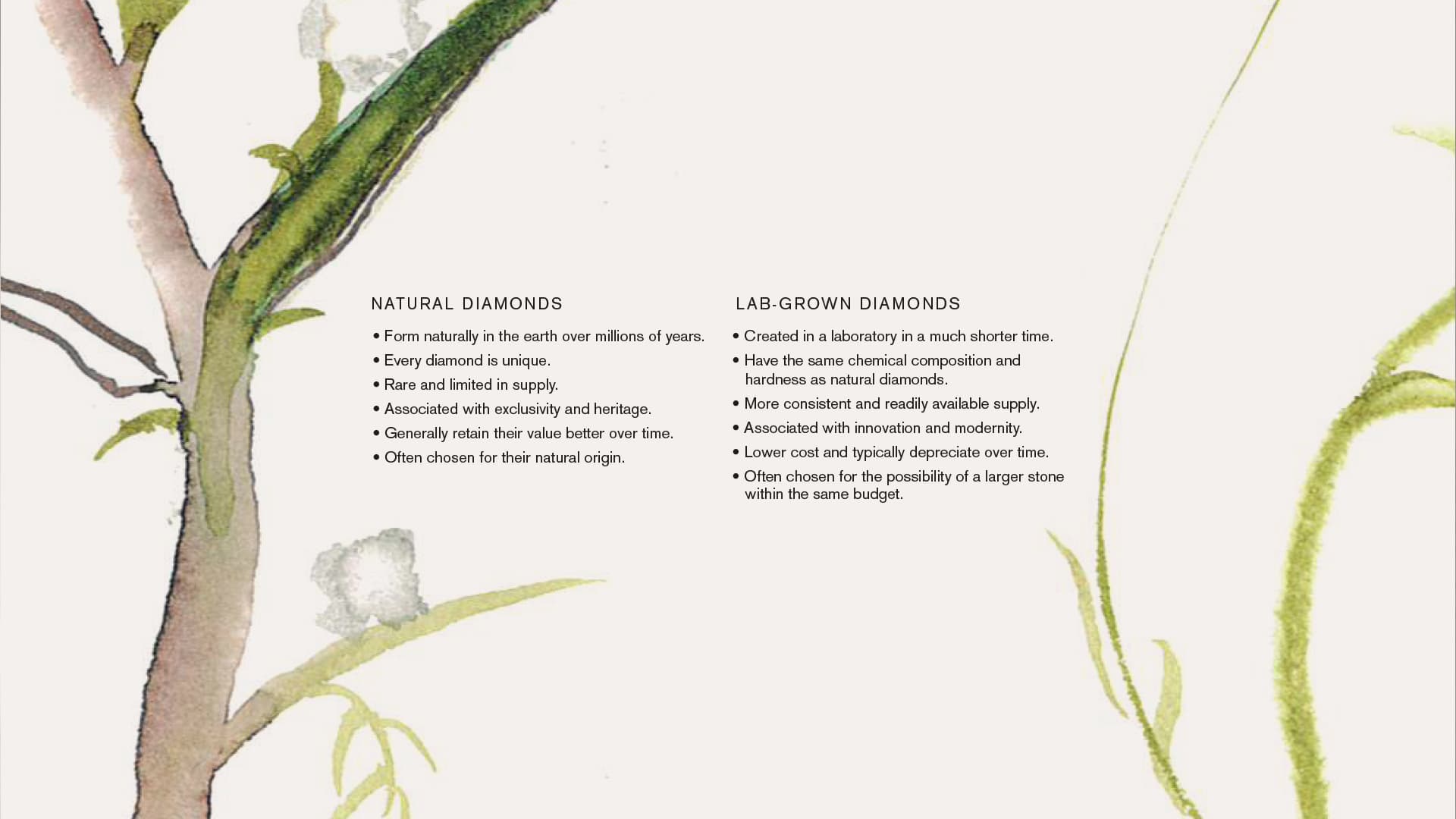
Natural and lab-grown diamonds share the same beauty and quality, but differ in their origin and the journey they take to become a finished diamond. Here, we explain more about the differences between them – and what may be important to consider when choosing a diamond.
Quality and Appearance
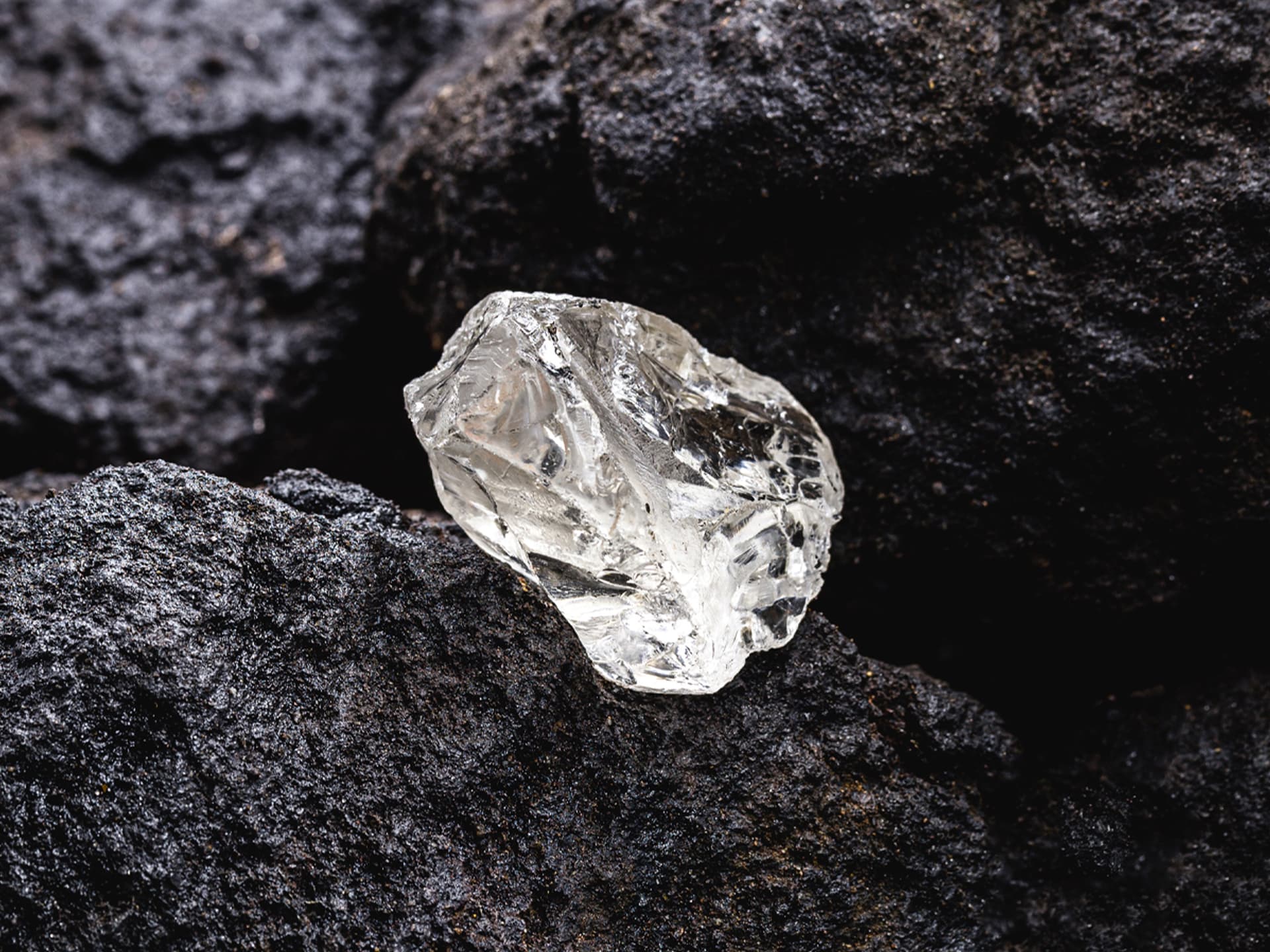
Choosing between a natural and a lab-grown diamond is a personal decision. Both are genuine diamonds with the same chemical composition, hardness and optical properties. The difference lies in their origin and how they were created – one formed naturally over millions of years, the other produced in a laboratory using advanced technology.
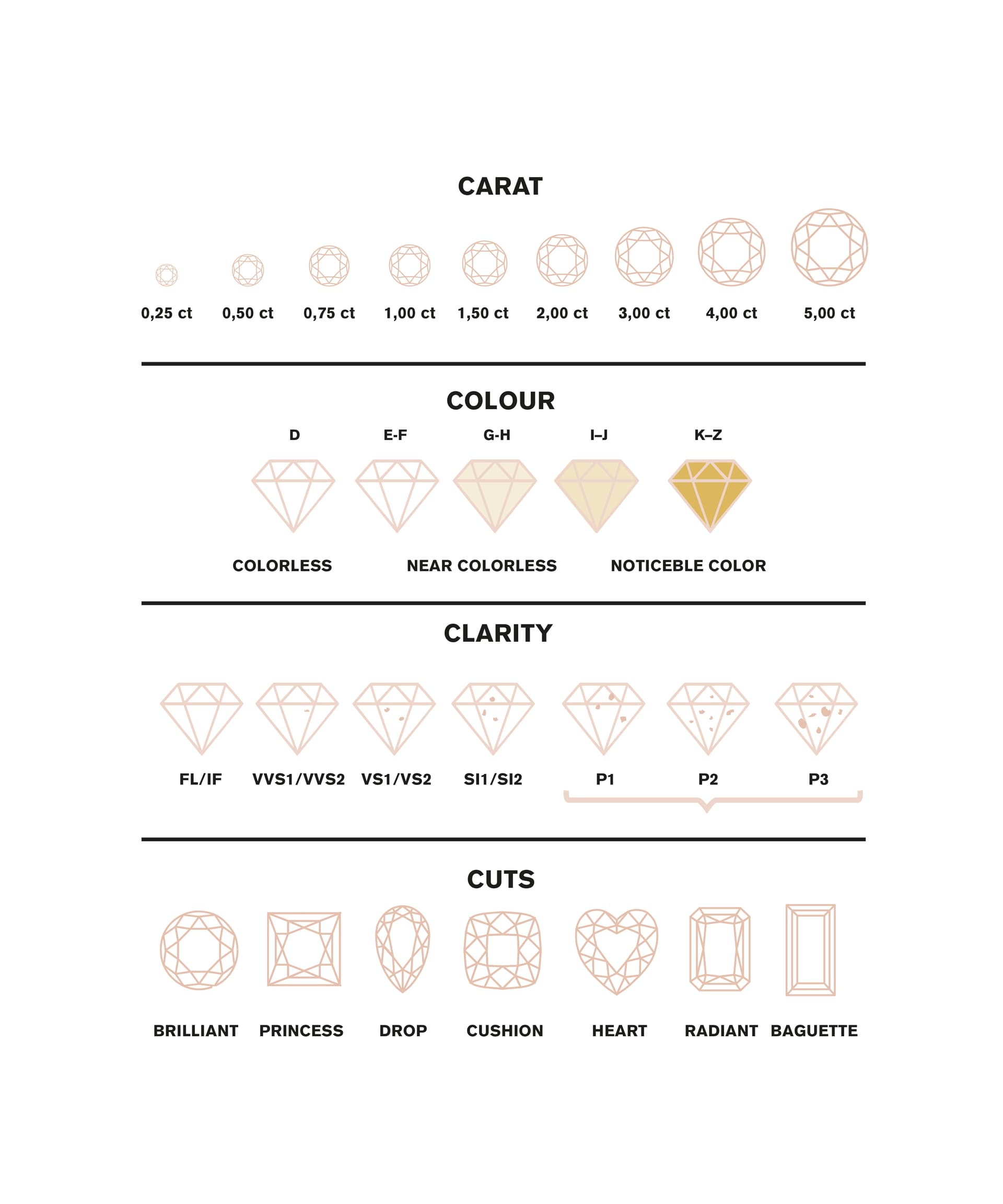
Diamond quality is assessed according to the same international standard, known as the 4Cs: Colour, Clarity, Cut and Carat. To the naked eye, there is no visible difference between a natural and a lab-grown diamond.
Natural Diamonds – An Investment Over Time
The price of a lab-grown diamond is often 20–50% lower than that of a natural diamond. This difference is due to the fact that lab-grown diamonds can be produced on a larger scale and within a much shorter timeframe, whereas natural diamonds are rare and have formed over millions of years.
For this reason, a natural diamond is often regarded as a lifelong investment, with value that may endure over time. Lab-grown diamonds, on the other hand, tend to decrease in value as production increases and availability becomes more widespread.
Quality and Appearance
Choosing between a natural and a lab-grown diamond is a personal decision. Both are genuine diamonds with the same chemical composition, hardness and optical properties. The difference lies in their origin and how they were created – one formed naturally over millions of years, the other produced in a laboratory using advanced technology.
Diamond quality is assessed according to the same international standard, known as the 4Cs: Colour, Clarity, Cut and Carat. To the naked eye, there is no visible difference between a natural and a lab-grown diamond.
Natural Diamonds – An Investment Over Time
The price of a lab-grown diamond is often 20–50% lower than that of a natural diamond. This difference is due to the fact that lab-grown diamonds can be produced on a larger scale and within a much shorter timeframe, whereas natural diamonds are rare and have formed over millions of years.
For this reason, a natural diamond is often regarded as a lifelong investment, with value that may endure over time. Lab-grown diamonds, on the other hand, tend to decrease in value as production increases and availability becomes more widespread.
Certification
When purchasing from us, you can be confident that your natural diamond is conflict-free. We source our diamonds from established and trusted suppliers in Antwerp who guarantee and exclusively supply conflict-free diamonds.
When purchasing a natural diamond ring with a diamond of 0.40ct or above, or a lab-grown diamond ring with a diamond of 0.30ct or above, an international grading certificate from GIA (Gemological Institute of America) or IGI (International Gemological Institute) is included.
The certificate verifies your diamond’s authenticity and origin and serves as proof of its quality, characteristics and grading. It is an important document that provides transparency and security for future valuations and insurance purposes.
Certification
When purchasing from us, you can be confident that your natural diamond is conflict-free. We source our diamonds from established and trusted suppliers in Antwerp who guarantee and exclusively supply conflict-free diamonds.
When purchasing a natural diamond ring with a diamond of 0.40ct or above, or a lab-grown diamond ring with a diamond of 0.30ct or above, an international grading certificate from GIA (Gemological Institute of America) or IGI (International Gemological Institute) is included.
The certificate verifies your diamond’s authenticity and origin and serves as proof of its quality, characteristics and grading. It is an important document that provides transparency and security for future valuations and insurance purposes.
A swedish story
When it was discovered in 1797 that diamonds are made of carbon, the race to create diamonds using machines began. The first synthetic diamonds were produced in Sweden in 1953 by Erik Lundblad at ASEA’s research laboratories (now ABB). Research had already started in 1942 under the secret codename Quintus — Latin for five, as the diamond was considered to represent the fifth element.
To create the diamonds, researchers used a high-pressure press developed by inventor Baltzar von Platen. At the same time, the American company General Electric (GE), unaware of ASEA’s work, was pursuing the same goal.
Because ASEA chose to keep the discovery confidential, GE was able to patent the technology first and became associated with the invention of synthetic diamonds, despite ASEA having achieved the breakthrough earlier.
The first lab-grown diamonds were primarily used for industrial purposes. It was not until the early 2000s that their quality became high enough for use in jewellery. Today, advanced technology makes it possible to create lab-grown diamonds with the same chemical composition, hardness and optical properties as natural diamonds.