Shopping cart
You have 0 Item in your cart
Language and Shipping
Choose your language and shipping country in order to see correct pricing, delivery times and shipping costs.
Language and Shipping
The Colour of the diamond
There are many factors that affect the price for a diamond, one of them is the colour of the diamond. Learn everything you need to know to feel safe before your diamond purchase.
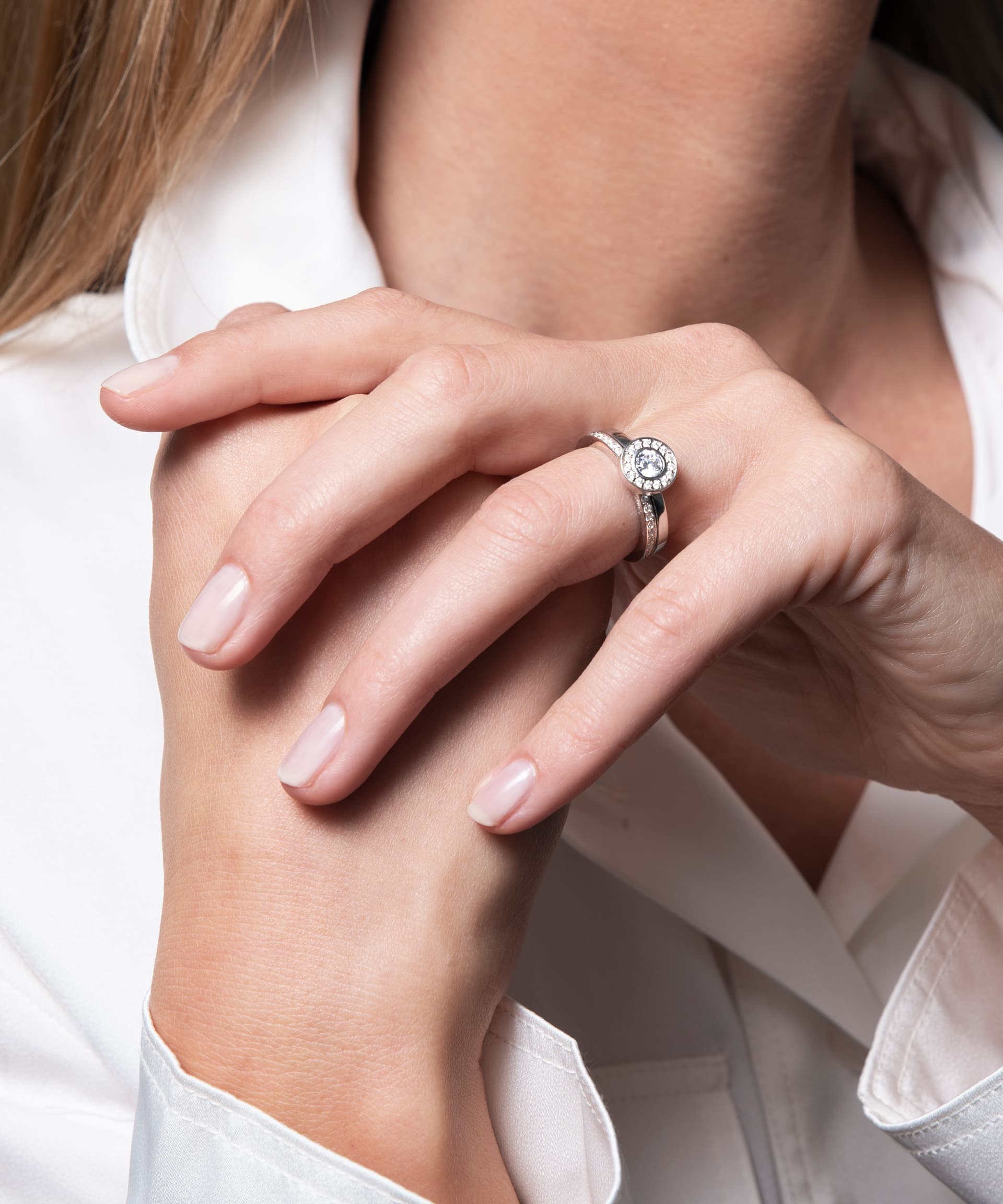
The Diamond Colour Scale
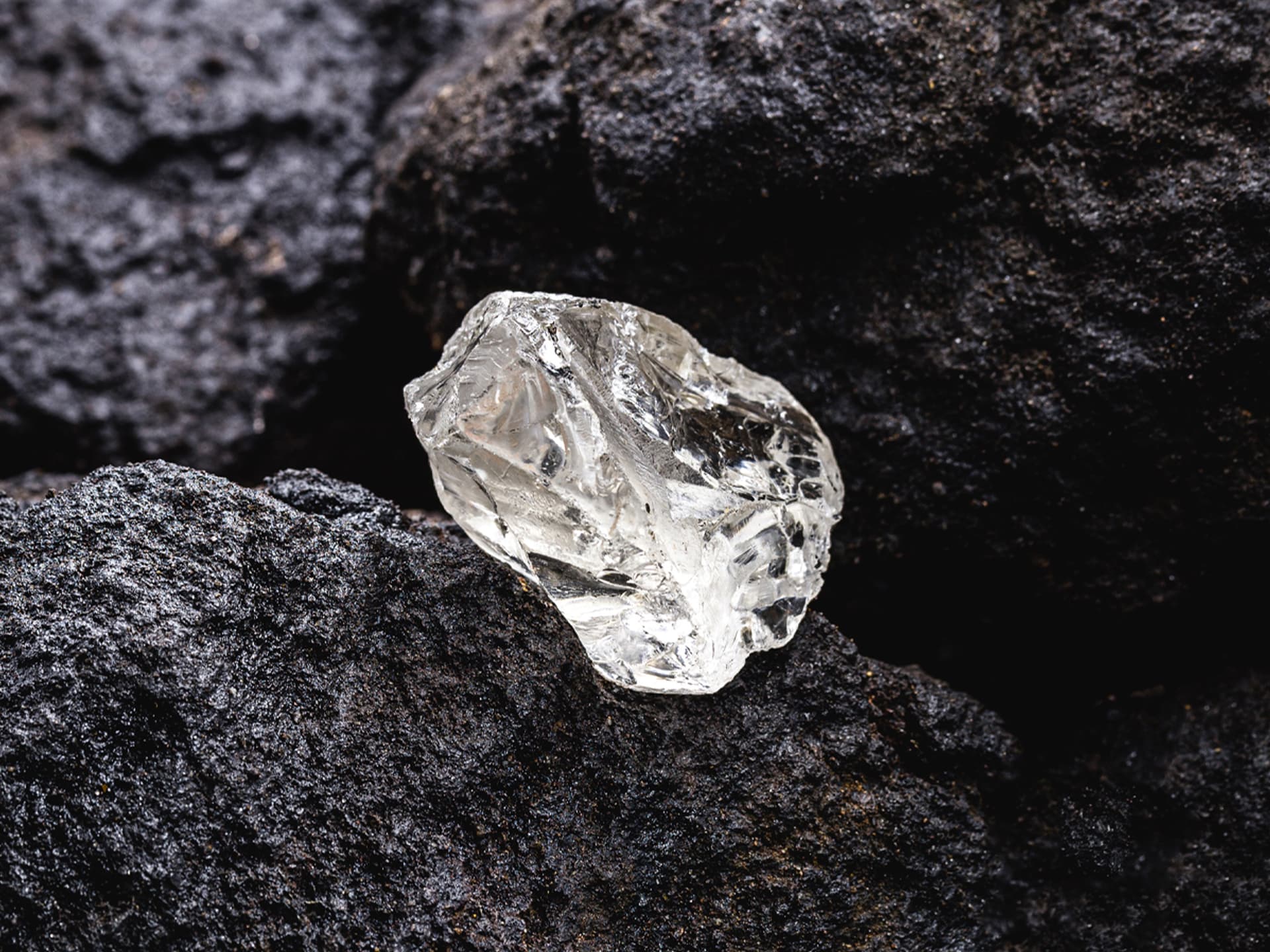
When grading the colour of a diamond, its lack of colour is assessed. The less colour a diamond contains, the higher its quality grading. Most white diamonds are graded on a scale from colourless to light yellow, although some may also show brown or grey undertones.
There are two commonly used systems for grading diamond colour: the international GIA D–Z scale and the older, traditional terminology using names such as River and Top Wesselton. At Efva Attling Stockholm, we use the traditional terminology while also stating the corresponding GIA grading. We only use diamonds with the second highest classification, Top Wesselton, meaning rare white diamonds.
• River (R): Very rare white. (D-E on GIA's colour scale)
• Top Wesselton (TW): Rare white. At Efva Attling Stockholm, we only use diamonds with this grading. (F – G on GIA's colour scale)
• Wesselton (W): White. (H on GIA's colour scale)
• Top Crystal (TCr): Very lightly tinted white. (I (Com) on the GIA colour scale)
• Crystal (Cr): Lightly tinted white. (J(Com) on the GIA colour scale)
• Top Cape (TCa): Tinted white. (K(Com)–L on GIA's colour scale)
• Cape (CA): Slightly yellowish. (M – N on GIA's colour scale)
• Light Yellow (LY): Light yellow. (O – R on GIA's colour scale)
• Yellow (Y): Yellow. (S – Z on GIA's colour scale)
The Diamond Colour Scale
When grading the colour of a diamond, its lack of colour is assessed. The less colour a diamond contains, the higher its quality grading. Most white diamonds are graded on a scale from colourless to light yellow, although some may also show brown or grey undertones.
There are two commonly used systems for grading diamond colour: the international GIA D–Z scale and the older, traditional terminology using names such as River and Top Wesselton. At Efva Attling Stockholm, we use the traditional terminology while also stating the corresponding GIA grading. We only use diamonds with the second highest classification, Top Wesselton, meaning rare white diamonds.
• River (R): Very rare white. (D-E on GIA's colour scale)
• Top Wesselton (TW): Rare white. At Efva Attling Stockholm, we only use diamonds with this grading. (F – G on GIA's colour scale)
• Wesselton (W): White. (H on GIA's colour scale)
• Top Crystal (TCr): Very lightly tinted white. (I (Com) on the GIA colour scale)
• Crystal (Cr): Lightly tinted white. (J(Com) on the GIA colour scale)
• Top Cape (TCa): Tinted white. (K(Com)–L on GIA's colour scale)
• Cape (CA): Slightly yellowish. (M – N on GIA's colour scale)
• Light Yellow (LY): Light yellow. (O – R on GIA's colour scale)
• Yellow (Y): Yellow. (S – Z on GIA's colour scale)
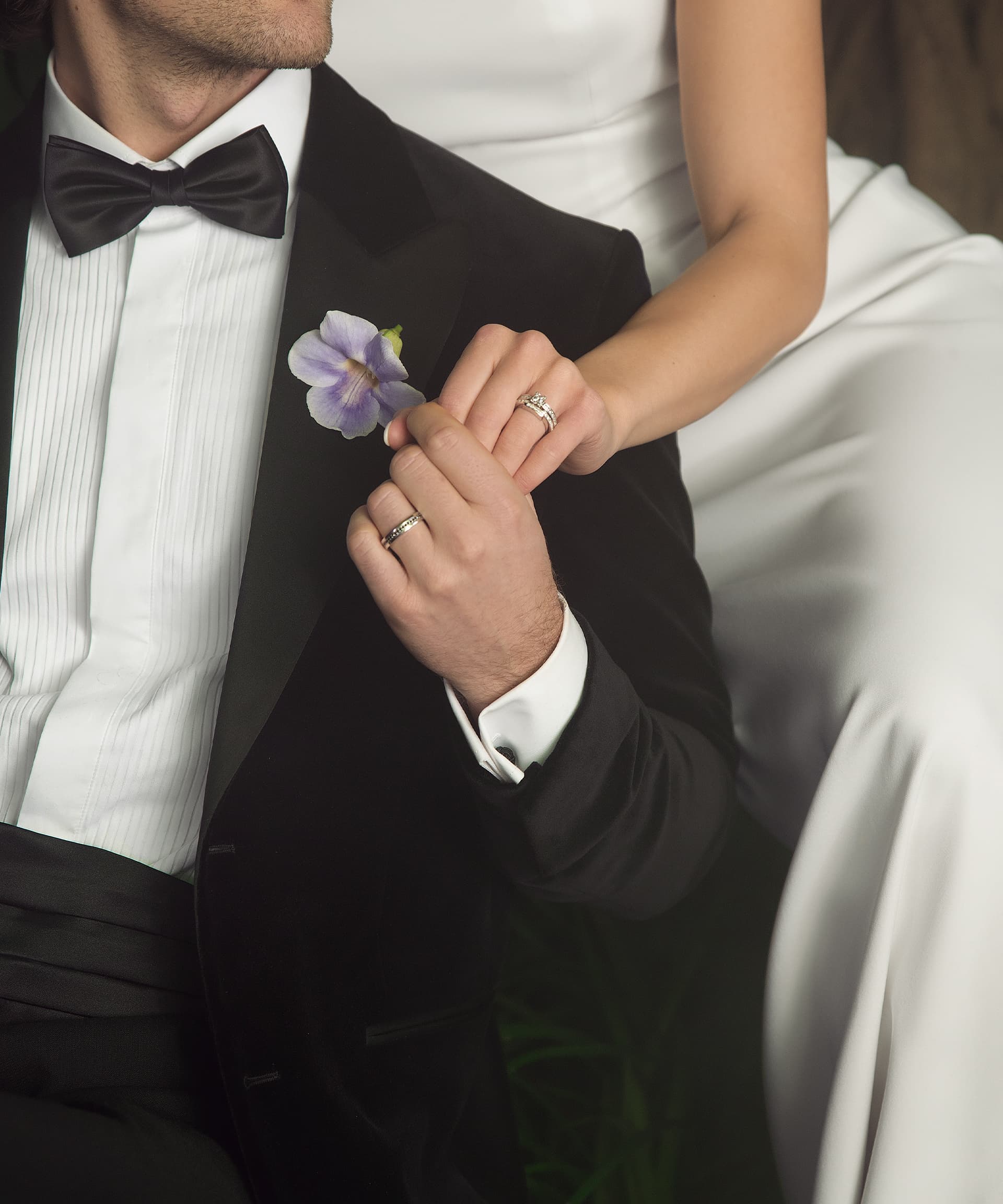
Fancy colour & black diamonds
Sometimes it happens that naturally coloured diamonds are found, with colours outside the colour scale above. These diamonds are called fancy colour diamonds, and can appear in red, blue, yellow, green, or champagne. But finding a fancy colour diamond is extremely unusual, only one in 10 000 diamonds is coloured this way, which is also reflected in the price.
A fancy colour diamond is usually sold exclusively based on its colour and intensity, other aspects such as clarity and cut are therefore not as important. However, it is important to be aware that most coloured diamonds available on the market are not naturally coloured, they have been treated artificially.
For a long time, black diamonds have been a mystery, because it is so rare to find them in the mines. So far, they have only been found in two places, in the Central African Republic, and Brazil. Despite this, there are a lot of black diamonds available on the market. The answer is simpler than you might think.
Most black diamonds sold today are ordinary diamonds, with slightly lower quality, which has been irradiated in a special process that makes them dark. This means that black diamonds are often less expensive than white ones. At Efva Attling Stockholm, we use these kinds of black diamonds. Because it is hard to find something more suitable than black diamonds, if you just want something that is really edgy.
Fancy colour & black diamonds
Sometimes it happens that naturally coloured diamonds are found, with colours outside the colour scale above. These diamonds are called fancy colour diamonds, and can appear in red, blue, yellow, green, or champagne. But finding a fancy colour diamond is extremely unusual, only one in 10 000 diamonds is coloured this way, which is also reflected in the price.
A fancy colour diamond is usually sold exclusively based on its colour and intensity, other aspects such as clarity and cut are therefore not as important. However, it is important to be aware that most coloured diamonds available on the market are not naturally coloured, they have been treated artificially.
For a long time, black diamonds have been a mystery, because it is so rare to find them in the mines. So far, they have only been found in two places, in the Central African Republic, and Brazil. Despite this, there are a lot of black diamonds available on the market. The answer is simpler than you might think.
Most black diamonds sold today are ordinary diamonds, with slightly lower quality, which has been irradiated in a special process that makes them dark. This means that black diamonds are often less expensive than white ones. At Efva Attling Stockholm, we use these kinds of black diamonds. Because it is hard to find something more suitable than black diamonds, if you just want something that is really edgy.