Shopping cart
You have 0 Item in your cart
Language and Shipping
Choose your language and shipping country in order to see correct pricing, delivery times and shipping costs.
Language and Shipping
The Platinum Guide
Platinum is a white precious metal that retains its colour and is highly durable. It is also heavier than gold and a good choice for jewellery worn daily. Over time, it develops a soft, satin-like patina.
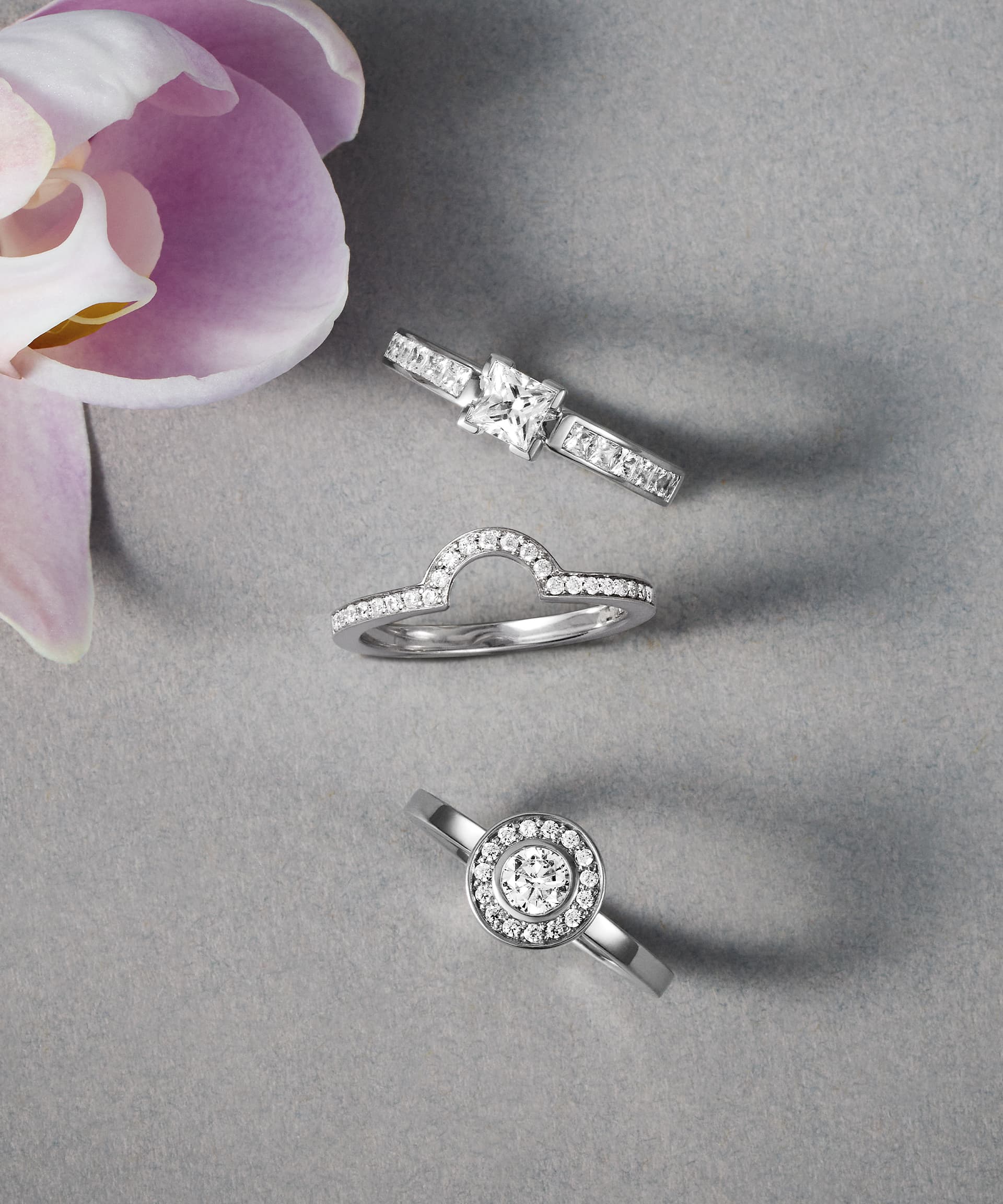
Why platinum is a durable choice
Platinum is a naturally white precious metal that retains its colour without the need for surface treatment. Unlike white gold, its tone does not change over time. In jewellery, the alloy 950 platinum is most commonly used, meaning the metal consists of 95% pure platinum. It is therefore not alloyed with as many other metals as gold and silver. This high level of purity makes it gentle on the skin and well suited for jewellery worn daily.
Platinum has a higher density and is heavier than gold, giving the piece a distinct sense of quality when worn. The metal is also highly durable. If the surface becomes scratched, no material is lost – instead, the metal is displaced within the surface, allowing the jewellery to retain both its weight and shape over time.
Why platinum is a durable choice
Platinum is a naturally white precious metal that retains its colour without the need for surface treatment. Unlike white gold, its tone does not change over time. In jewellery, the alloy 950 platinum is most commonly used, meaning the metal consists of 95% pure platinum. It is therefore not alloyed with as many other metals as gold and silver. This high level of purity makes it gentle on the skin and well suited for jewellery worn daily.
Platinum has a higher density and is heavier than gold, giving the piece a distinct sense of quality when worn. The metal is also highly durable. If the surface becomes scratched, no material is lost – instead, the metal is displaced within the surface, allowing the jewellery to retain both its weight and shape over time.
It ages with grace
Over time, platinum develops a soft, satin-like patina. This is a natural transformation that many appreciate, as it gives the jewellery a more personal expression. For those who prefer a high polish, a goldsmith can easily restore the lustre through polishing.
Platinum is one of the rarest precious metals in the world – even rarer than gold.
The metal was discovered by European explorers in South America in the 16th century, but it was not used in fine jewellery until several centuries later.
During the 18th and 19th centuries, platinum became valued in European courts and among the upper classes, thanks to its strength and naturally white colour. In the 20th century, the metal secured its place in high jewellery, particularly in diamond pieces.